Climate Burnout and Emotional Resilience: Why Climate Work Needs an Emotional Lens
with Liz Moyer Benferhat, Founder of We Heal For All
Key takeaways
- Emotions carry information. Anger, grief and anxiety reveal what people value, and teams can treat them as organizational data.
- Support can be simple. A ten-minute check-in or a little extra grace goes a long way.
- Transformation beats bouncing back. Healing moves people toward what they are becoming, not just back to normal.
- Hope needs grounding. Low points build grit, and grounded hope outlasts toxic positivity.
- Collective pain is a signal. Rising collective anxiety suggests parts of the system are no longer working.
Climate and development conversations tend to focus on technology, finance and policy. This episode of Tangelic Talks turns to the people doing the work.
Victoria Cornelio and TJ Omojomolo speak with Liz Moyer Benferhat, who spent nearly two decades in sustainable development before founding We Heal for All to address the burnout, grief and exhaustion she kept seeing.
The Missing Piece in Technical Climate Work
Liz values evidence-based, scalable solutions. Her point is that the human dimension gets lost along the way.
She compares the field to medicine: doctors become desensitized to routine procedures, and that skill helps them. Climate and development staff face famine, war and the livability of the Earth, and rarely receive the same recognition of what that does to them.
If you can’t function, the movement isn’t really going to go anywhere.Victoria Cornelio
Her answer is a whole-systems approach, applied to program design and to the development of leaders and change-makers.
Emotions as Organizational Data
Liz challenges the idea that emotional skill means calming everything down. Drawing on clinical psychology and neuroscience, she describes emotions as intelligence that helps people adapt.
- Anger protects what matters, much like a mother bear protecting her cub.
- Reframing: anger over a budget cut or a policy decision shows what someone values.
- For leaders: ask what you and your team are feeling, and treat the answer as an asset.
Practical Ways to Support Your Team
Emotional well-being does not need a large program. Liz suggests:
- Name it: take ten minutes at the start of a meeting to acknowledge a difficult event or a budget loss.
- Check in: ask your people how they are doing.
- Give grace: allow slower email replies when the world feels heavy.
- Lead by example: developing your own emotional skills signals that it is acceptable to be human at work.
- Know where to turn: some support fits inside the organization, and some belongs outside it.
Teams still need to deliver, so none of this requires hours of group sharing.
The Circle Model for Collective Healing
Liz’s main method is a circle model grounded in the science of emotions and designed to be trauma-centered.
- Slowing down: helping the mind and body shift out of a fast-paced day.
- Contemplative practice: meditation and mindfulness build observation of self.
- Sharing: space for parts of ourselves that need support, without a neat beginning, middle and end.
- Why groups: collective issues such as climate change are well suited to collective processing, because no one holds all the answers.
Resilience vs Transformation
Liz is wary of the word resilience because it implies returning to how things were. She prefers transformation through healing.
- Working with what we feel can leave us better resourced.
- It can also clarify our role and what values like inclusion mean in practice.
- The question shifts from “How do I get back?” to “What am I evolving into?”
Hope Without Toxic Positivity
When Victoria asks about working for change without always feeling hopeful, Liz describes hope as cyclical.
- Low points are full of grit and can mature into grounded hope.
- Both individuals and societies move through highs and lows.
- The goal is equanimity: hopeful, and realistic that progress will not be all rainbows.
She also notes that people cope differently. Some tune out, and others become hypervigilant. Underneath, each response is trying to keep them safe, and that is where support can begin.
Why the Conversation Changed After the Pandemic
Liz started out focused on climate psychology. Over time, collective trauma and growing geopolitical turmoil have made the work relevant to people well beyond the social impact sector. More people now recognize how heavily the news weighs on them.
Advice for Changemakers Who Want to Stay Whole
Liz’s closing advice is to move from needing to change things toward wanting to participate and live your values.
- Find your fit: the work looks different for everyone, and that is a strength.
- Fill your own cup: she describes a UN think tank role that looked impressive on paper but drained her.
- Choose your place: look for where, in a large network of people, you are best suited to be.
Watch the full conversation above, then read Liz’s answers to the audience questions below.
Thought-Provoking Q&A with Liz Moyer Benferhat
After the conversation, Liz Moyer answered questions on burnout, evolving work structures, and collective grief. Her answers are lightly edited for clarity.
How do different cultures understand grief and healing?
Working across Africa, South America and the UN showed Liz that some communities have material poverty alongside spiritual richness, and that different spaces value different kinds of intelligence.
Is burnout rising, or are we measuring it more?
Liz thinks it is both. Cultural attitudes and research on psychological safety have shifted, and professionals also face real pressure from the economy, the media and perfectionism.
Will shorter working weeks help?
She does not claim a clean answer. Sectors differ, generations have different expectations, and organizations are working this out in real time.
What does “the pain of the world makes sense” mean?
Rising collective anxiety, grief and anger can signal that existing structures are no longer working, which makes them part of a larger process of change.
Is this a structural problem?
Yes, she sees it as a signal from the system itself that structures need to evolve.
Which emotion should we stop judging?
It varies by person. Liz points to anger for herself, and for others it may be grief, sadness or vulnerability.
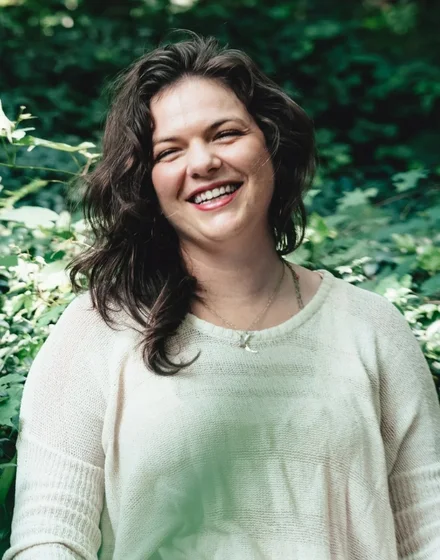
Liz Moyer Benferhat
Founder, We Heal For All
Liz Moyer Benferhat is a sustainable development expert and the founder of We Heal For All, an organization that addresses the emotional toll of social change work by teaching experiential emotional processing through her signature Circle model. She helps professionals, activists, and everyday people navigate and process the world’s pain to sustain their impact.
Her nearly two decades of development work spans from grassroots programs in Africa and South America to SDG policy through the UN’s Sustainable Development Solutions Network. She holds an MPA from Columbia University and is the award-winning author of When the World Hurts.