
A Climate Project Can Fit in a Photograph. Infrastructure Cannot.
Why the future of clean energy is decided by what happens after installation.
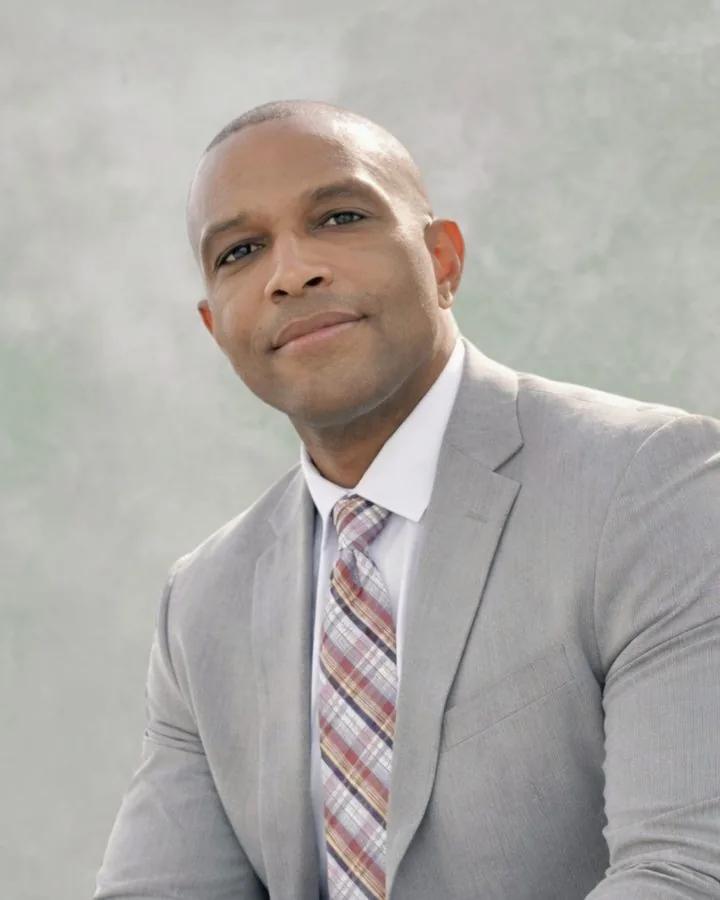 Dr. Justin DarginChairman of the Board, Tangelic
A row of new cookstoves makes a good photograph. So do solar panels on a rooftop, or a community switching on its lights for the first time.
The photograph captures a moment. It cannot show whether the equipment still works a year later, whether households can afford to keep using it, or whether the model can be repeated across hundreds of communities without cost and risk spiraling out of control.
Those are the questions that decide whether the energy transition delivers lasting change, or leaves behind a trail of promising projects that never became infrastructure.
Getting a solution into the field is not the hard part. Building the system that makes it endure and expand is.
That is the work Tangelic was built to do.
01The Technology Is Only the Beginning
A cleaner stove means less fuel, less smoke, and a healthier home. A solar home system changes how a family’s evening unfolds, how children study, and how a small business trades after dark. The benefits are real. Installation alone does not secure them.
The equipment has to fit the household, reach remote communities, and be maintained long after the launch team has left. Multiply that across thousands of homes, each with its own constraints, and the problem changes. Procurement, logistics, maintenance, financing, and accountability can no longer be improvised project by project. They must operate as one system.
That is the line between distributing clean energy products and building climate infrastructure. Tangelic’s Sunrise Spectrum initiative in Ghana is built on the right side of it: every deployment is designed to strengthen a model that can be repeated, not to add another number to a count.
02Scale Is Not a Matter of Adding Zeros
The common assumption is that scaling means doing more of the same: a bigger budget, a wider network, more partners. In practice, scale changes the nature of the problem. Transport costs compound. Supply chains strain. Small weaknesses in coordination become expensive ones. Growth without structure magnifies inefficiency as fast as it magnifies impact.
Tangelic designs for repeatability from the start. Delivery economics are understood, operating responsibilities are clear, and lessons are captured and applied. Individual deployments become building blocks, connected by common operating principles and project structures that can support larger programs and, over time, standardized investment portfolios.
Scale is not what happens when a project gets bigger. It is what happens when the system can do more without losing what made it work.
03Capital Must Be Built Into the Model
Even a well-designed solution stalls when its financing does not match the realities of delivery. Serving underserved markets demands significant capital up front, complex logistics, and revenue that builds gradually. Investors need to see the risk, the economics, and the path to sustainability before they commit.
Tangelic structures blended finance and catalytic capital around those realities. Philanthropic, concessional, and commercial capital each play a defined role according to the project and its stage. Catalytic funding clears early barriers. Concessional capital closes financing gaps. Proven operating performance opens the door to larger pools of investment.
The aim is not to make risk disappear. It is to locate it, manage it, and structure capital accordingly, while keeping affordable energy, healthier homes, and local economic activity at the center of the work.
Capital should not simply pay for the installation. It should make the next stage possible.
04Carbon Finance Must Earn Its Place
For eligible projects, credible emissions reductions can generate carbon revenue that strengthens project economics. But potential credits are not issued credits, and projected revenue is not income. Reductions must be demonstrated under an applicable methodology, verified, approved, and matched to a viable market.
Tangelic is building its carbon-finance pathway alongside its energy work, on exactly that discipline. Carbon revenue can reinforce a sound model. It will never be used to disguise a weak one. Carbon markets run on confidence that the climate benefits claimed are real, so the credibility of the project and the credibility of the asset are one and the same.
The sequence is fixed: build the intervention, prove the results, then capture the value.
05The Infrastructure You Cannot See
Panels, batteries, and stoves are easy to photograph. What keeps them working is not: trusted implementation partners, skilled local technicians, reliable procurement, and the capacity to find and fix problems long after launch.
That is why local partnership is not a social add-on. It is operating structure. Local knowledge exposes obstacles that a model designed from a distance would miss, and local capacity turns a one-time delivery into a service people can depend on. From there, reliable energy reaches further, powering small enterprises, agriculture, and new productive work.
06From Household Energy to a New Model of Infrastructure
No single instrument solves the problem. Blended finance cannot rescue poor implementation. Carbon revenue cannot replace sound economics. Technology cannot overcome weak logistics or thin local capacity. The value lies in connecting them.
Through Sunrise Spectrum, Tangelic brings deployment, project development, and financing together in one model. The next stage is not to repeat installations at greater volume. It is to strengthen the engine behind them: build operating evidence, sharpen project economics, deepen local capacity, and create structures that financing partners can join at scale.
Energy access is not achieved the day equipment arrives. Its value unfolds afterward, in the services it delivers, the opportunities it opens, and the reliability people come to expect. That is the standard climate infrastructure must meet.
A successful project proves that something can work. Infrastructure makes that result endure, and repeat.
Tangelic is putting this principle at the center of its clean energy work in Ghana and its approach to climate infrastructure across emerging markets.
Because the future will not be built by installations alone. It will be built by the systems that connect them.