
Clean Energy in Nigeria: Patient Capital and Africa’s Energy Future
with Ifeoma Malo, Co-Founder & CEO of Clean Technology Hub Nigeria
Key takeaways
- Reliable power is about more than lights. It lets communities run businesses, process crops, and build local economies.
- Patient capital has to reach the people building the infrastructure, not just project development.
- Governments can act as a bridge, so banks lend on terms renewable energy developers can actually meet.
- Countries need to pick priority sectors and back them with targeted subsidies, as the UK and others do for solar and wind.
- A deliberate balance between importing equipment and building domestic manufacturing is a hard choice that has to be made.
What will it take to bring reliable electricity to millions of people across Africa? The answer goes beyond solar panels and new technology. It requires investment, local manufacturing, and the determination to reach communities that conventional energy systems have left behind.
In this episode of Tangelic Talks, hosts Victoria Cornelio and TJ Omojomolo speak with Ifeoma Malo, co-founder and CEO of Clean Technology Hub Nigeria, about the future of clean energy in Nigeria, rural electrification, and the capital needed to scale renewable energy across Africa.
Beyond Electricity: Powering Local Economies
For millions of people, unreliable electricity is more than an inconvenience. It limits businesses, undermines agricultural productivity, and makes essential services harder to deliver. In Nigeria, widespread reliance on backup generators shows the economic cost of an unreliable power supply.
Decentralized renewable energy offers another path. Solar mini-grids and off-grid systems can bring electricity to underserved communities while powering small businesses, agricultural processing, and other productive activities.
As Ifeoma explains, the real opportunity is not simply to connect households to electricity. It is to help communities use that electricity to create jobs, grow businesses, and build stronger local economies.
Why Africa Needs Patient Capital
Technology alone will not deliver Africa’s energy transition. Clean energy investment in Africa must also address a persistent financing challenge: businesses building local manufacturing capacity often struggle to secure the long-term capital they need to grow.
Patient capital can help bridge that gap. By supporting local production, workforce development, and stronger domestic supply chains, investors can help create jobs, reduce import dependence, and keep more economic value within African markets.
If we want to consider having more patient capital for construction, we need patient capital accessible to those who want to build these projects.Ifeoma Malo
The opportunity is significant, but so is the challenge. Scaling clean energy requires financing structures that recognize both the commercial potential and the realities of building infrastructure in emerging markets.
When the Road to Energy Access Runs Through a Camel Crossing
Some of the biggest barriers to rural electrification have little to do with technology.
Ifeoma recounts a field visit in which a bridge washed away, forcing her team to cross by camel to reach a rural community. It is an extraordinary reminder that delivering clean energy depends on roads, logistics, local relationships, and the realities of life on the ground.
Successful renewable energy projects must therefore be designed around the communities they serve. Local participation is not an afterthought. It is central to making infrastructure work.
Africa’s Clean Energy Leapfrog Moment
Africa has an opportunity to expand electricity access without simply replicating the infrastructure pathways of the past. Just as mobile phones let many communities bypass fixed-line networks, decentralized renewable energy could bring power to places traditional grids have struggled to reach.
Turning that potential into reality will take more than promising technology. It will take patient investment, stronger local industries, practical policy, and partnerships that connect energy access with economic opportunity.
Watch the full conversation above, then read Ifeoma’s answers to the audience questions below.
Thought-Provoking Q&A with Ifeoma Malo
▶ Watch the Q&A from 32:43After the conversation, Ifeoma answered questions on financing, policy, and local industry. Her answers are lightly edited for clarity.
Is there anything we didn’t mention in our conversation that you would like to highlight or emphasize?
We talked about needing more patient capital, but I want to emphasize that more patient capital is needed for those who are actually building infrastructure, not just allocated to project development.
I sometimes hear people talking about $200 million in World Bank funds being allocated to mini-grids, but that $200 million is actually being allocated to mini-grid project development. It’s not necessarily funding the means to actually build batteries, cells, or controllers. If we want more patient capital for construction, we need patient capital accessible to those who want to build these projects.
Where do you see the biggest opportunity for governments and private investors to work together on this kind of patient funding? Is there a way to do it?
There is a way to do it. There have been a lot of projects and schemes to get commercial banks lending to the renewable energy sector, and for many years that has not worked. Banks put ridiculous terms around access to that financing, terms they know developers and distributors cannot meet, or that make it too risky for their businesses to take advantage of.
With that being the case, I think the government needs to come in and be a bridge, making sure the banks are lending in a way that makes sense for the people who need to take on this capital.
We talked about fuel subsidies being removed in Nigeria. What are your thoughts on subsidies for renewable and clean energy?
You may be thinking of some of the programs run by the Rural Electrification Agency with World Bank and AfDB funding. In the West, especially in the UK, there are subsidy mechanisms for solar and wind. We cannot industrialize if we don’t have those same sorts of subsidies.
To put it generally, our governments need to be more proactive and decide which sectors are a priority. Once those priorities are identified, the government puts in subsidy programs for businesspeople who want to take advantage of them.
It’s not just a Nigerian problem; subsidies exist everywhere. That’s why I’m not quite sure I understand the World Bank or IMF when they say remove subsidies, though I understand the concern, given corruption in a lot of African countries and how subsidies have been misused.
Are there capabilities energy organizations need to develop to be more attractive to institutional capital or grants? What makes an organization stand out?
My point was that there has to be a balance between foreign importation and domestic industrialization. Right now, it is sometimes cheaper to import a lot of these renewables than to produce them locally. But the hard choice has to be made to say: you can import up to this extent.
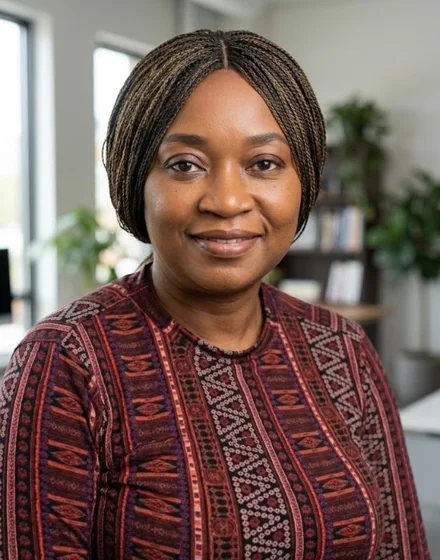
Ifeoma Malo
Co-Founder & CEO, Clean Technology Hub Nigeria
Ifeoma Malo is an organizational management expert with over 23 years’ experience building and directing organizational policy and strategy in energy and large-scale utility markets, public health, biotechnology, leadership, change management, and infrastructure finance.
She was previously Country Director for Power for All, where she drove the market and community development campaign for decentralized renewable energy in Nigeria through participatory regional programs. She also served as Senior Technical Adviser to the Honorable Minister of Power, providing senior strategy advice to advance electricity access, build communities and livelihoods, and secure a more stable, sustainable energy future across Nigeria.